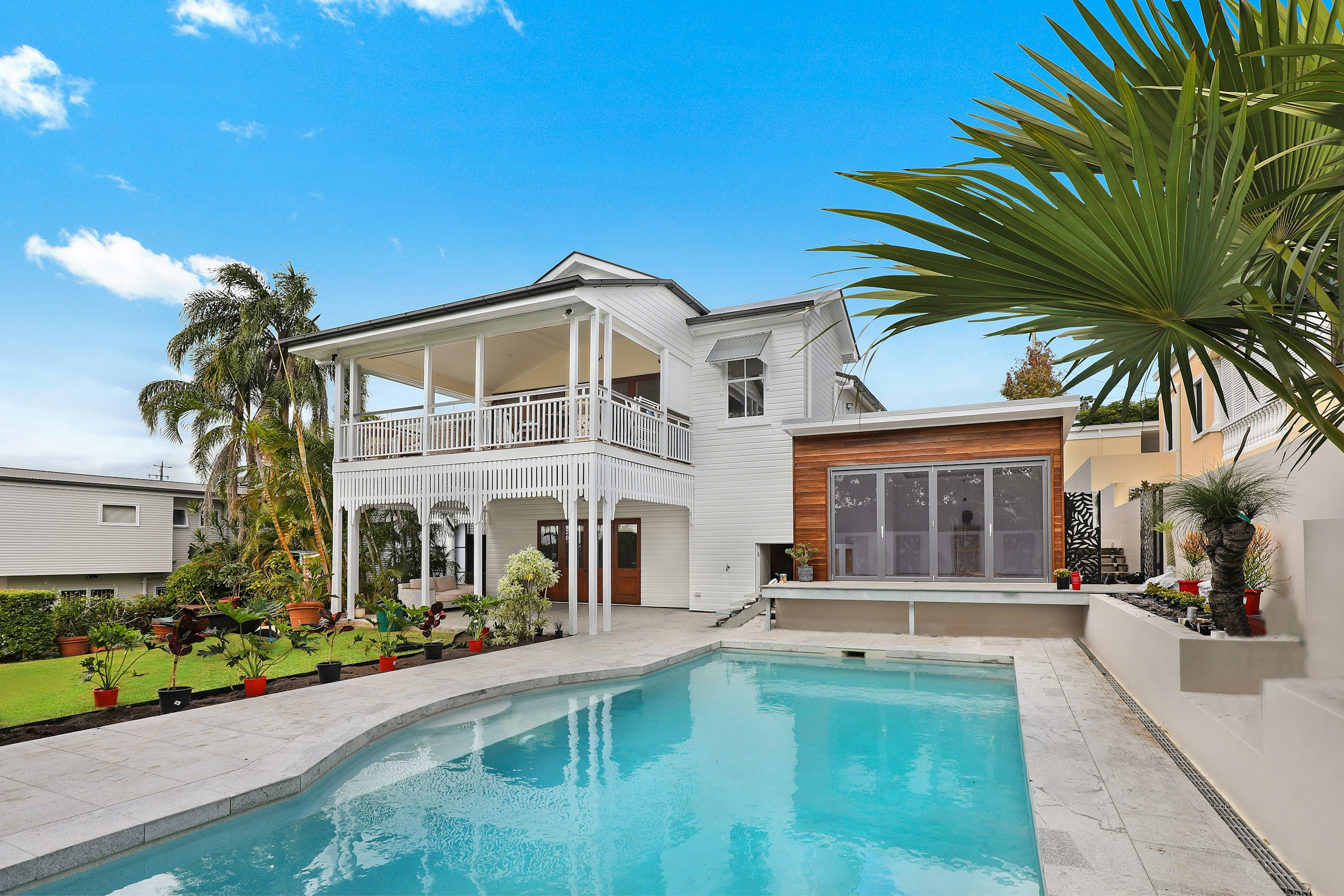
The two neighborhoods are roughly 12 kilometres apart and they inhabit different cities. Casco Antiguo is a 17th-century street grid that finishes at the bay; Costa del Este is a 1990s master plan built on reclaimed land east of downtown. A foreign resident weighing them tends to ask about price per square metre, school distance and HOA fees. Those matter less than the daily grammar of each — the way a week actually unfolds when you live inside one or the other.
Mornings
In Casco Antiguo, you walk. The neighborhood is roughly seven blocks by five and most errands compress into that footprint. Coffee on Avenida A, gym in a renovated colonial, breakfast at a café that opens to the street. The cobblestones make heels impractical and the humidity makes anything heavier than linen punitive, so dress code skews flat. Cars come out only to leave the neighborhood — and parking, when you return, is a real constraint.
In Costa del Este, you drive. The neighborhood is laid out the way American suburbs are: wide arterials, residential super-blocks, a commercial spine along Boulevard Costa del Este. Towers come with parking; ground-floor retail tends to live inside the towers themselves or in standalone strip malls reached by car. Walking the half-kilometre between two amenities is structurally possible and culturally rare. The treadmill is in the building gym, not in the street.
What is open and when
Casco is a 24-hour neighborhood by Panama City standards. Restaurants serve until 11 p.m., bars later, and noise complaints are rarely actionable inside the historical zone because the activity is part of what the UNESCO designation protects. The trade-off: weekends can feel like a stage set, with cruise tourists and bachelorette groups crowding the same square mile residents use to buy groceries and walk the dog.
Costa del Este winds down after dinner. Restaurants close earlier, the neighborhood is residential plus office, and after 9 p.m. the streets empty. For families with school-age children that is the feature, not the bug. For an unattached resident under 35, it can read as suburban silence.
Errands and the supermarket question
The single most-cited operational difference between the two neighborhoods is the supermarket question. Costa del Este has a full PriceSmart, multiple Riba Smith and Super 99 outlets, dry cleaners, pharmacies, dental offices and a private hospital all within a five-minute drive. Errands compound efficiently.
Casco does not. The neighborhood has a handful of small markets, a few specialty grocers and a mid-sized Riba Smith on its edge. A serious weekly grocery run almost always involves driving 10 to 15 minutes — usually to Albrook Mall or to Calle 50. Residents who stay long-term either accept the supermarket commute or restructure around daily shopping at smaller scale.
The weekly rhythm
The way a week falls into shape in each neighborhood is structurally different.
In Casco, the week is centripetal — work, gym, dinners and social rotation tend to compress into the same square mile. You see the same baristas, the same dog walkers, the same handful of architects and chefs and consultants who orbit the neighborhood. The downside is that the village quality also caps scale. There are not many schools, no large medical centres, no department-store-scale retail.
In Costa del Este, the week is centrifugal. Each activity is a separate trip — children to school, parents to office, gym to one tower, dinner at another, supermarket at a third. Distances are short by Panama City standards but they accumulate. The compensating advantage is that almost everything you actually need is inside or adjacent to the neighborhood; you rarely have to engage the rest of the city for routine life.
Weekends and the rest of the city
Both neighborhoods push residents outward on weekends, but for different reasons. Casco residents tend to leave because the neighborhood becomes denser with visitors; the most common destinations are Amador, the city's parks, or out of town to Coronado or Pedasí. Costa del Este residents leave because the neighborhood, by design, does not generate much weekend density of its own. Mall trips, Sunday lunch in San Francisco or El Cangrejo, and weekend houses on the Pacific are the standard pattern.
Who actually thrives in each
Neither neighborhood is better. The honest question is whether you want to live in the city as a continuous fabric or in the city as a sequence of contained experiences.
Casco rewards a particular profile: walkers, people without children or with adult children, residents who treat noise as life rather than nuisance, and anyone whose work or social life benefits from being seen and bumped into. The aesthetic premium — restored colonial volumes, stone-and-balcony elevations — comes with operational friction.
Costa del Este rewards a different profile: families, executives, anyone who values predictable infrastructure, controlled access and modern building services. The aesthetic — repetitive towers, master-planned streets, contemporary HOA-managed estates — is functional rather than expressive, but the operational layer is among the most reliable in metropolitan Panama City.
What the choice usually comes down to
Foreign residents who pick Casco and stay tend to be the ones who wanted a city to live in, not a building to live in. Foreign residents who pick Costa del Este and stay tend to want the opposite: their building, their gym, their pool, their school, their office, all inside a 1.5-kilometre radius they trust to function the same way every day.
Both are defensible. Neither is what the brochure says it is. The most common error among foreign buyers is to choose between them on price per square metre alone, then discover six months later that the neighborhood they bought into is not the city they wanted to inhabit.