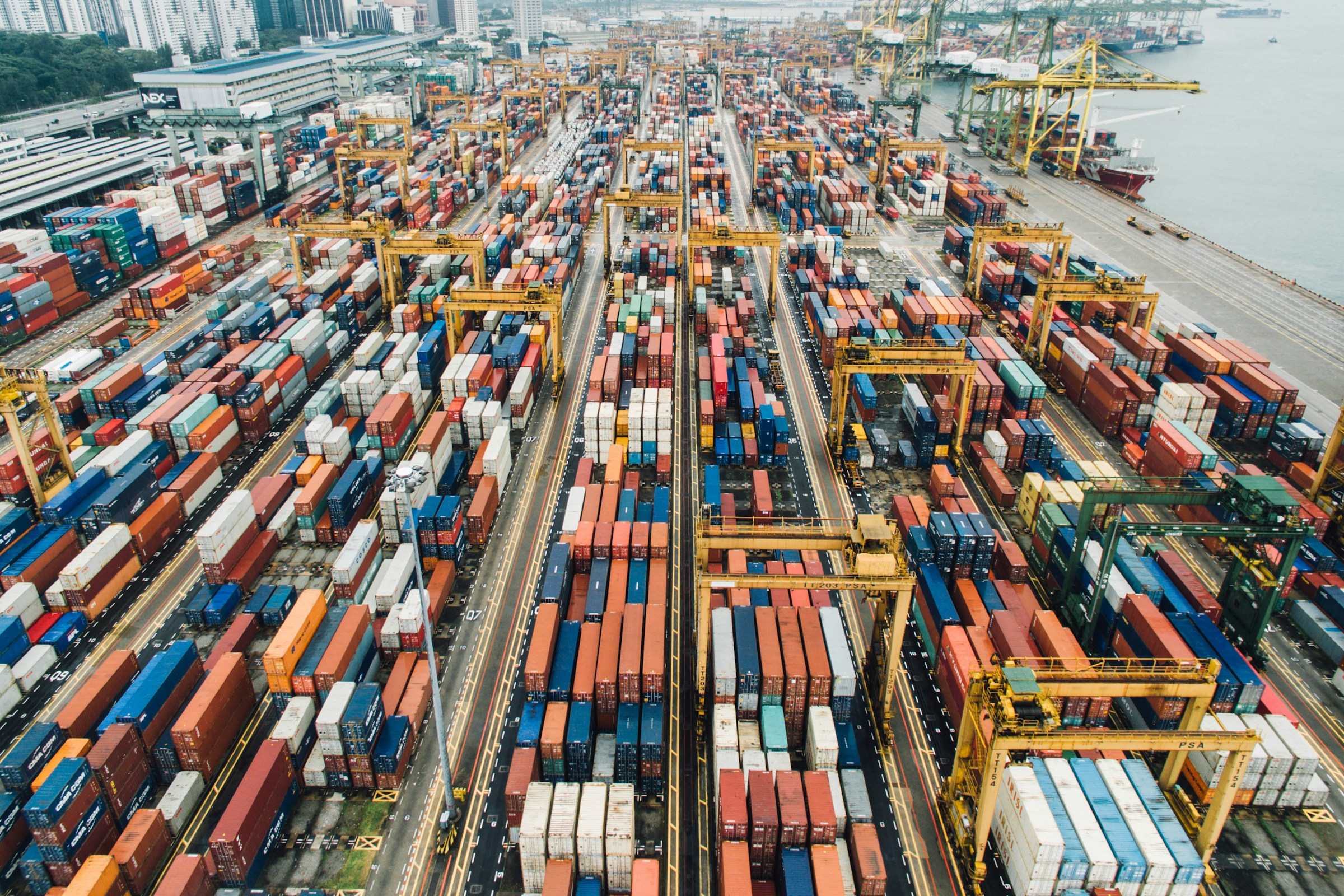
Panama City this week is hosting roughly 1,500 delegates from 93 countries at the World Free Zones Congress, an industry gathering that the local press has covered as a nearshoring set-piece. The headline numbers are familiar to anyone who tracks supply chains: about 5,000 special economic zones operate worldwide, 700 of them in Latin America, employing more than 100 million workers and accounting for roughly one-third of all globally traded goods, according to La Estrella's coverage of the event. The interesting question for metropolitan Panama real estate is not what gets said on the conference floor. It is which of those delegates returns inside six months with a leasing mandate, and where in the city the demand actually lands.
What is actually being convened here
Free zones are jurisdictionally fenced industrial and logistics areas with a separate tax and customs treatment. Panama operates several: the Colón Free Zone on the Caribbean coast, the Panamá Pacífico special economic area on the converted Howard Air Force Base west of the city, and a handful of smaller regimes including Ciudad del Saber. The current Congress, hosted in Panama City, is being framed domestically as a referendum on whether the country's logistics-and-services pitch is starting to convert into long-term tenants rather than headlines.
Companies are rethinking supply chains, seeking shorter models closer to final markets. — Cesare Zingone, board director of the World Free Zones Organization, to La Estrella, May 13, 2026.
For property markets, the relevant translation is mundane. Free zones generate two distinct kinds of metropolitan Panama City real estate demand: where the executives live, and where the parts of the company that do not sit inside the zone end up renting office space.
Where free-zone executives actually live
Panamá Pacífico, the largest of the country's mixed-regime zones, technically sits outside the metropolitan core PanamaKey covers — across the Bridge of the Americas, in the corregimiento of Howard. But the executive class that operates from inside the zone consistently rents or buys housing on the city side. The pull is predictable: international schools, private hospitals, restaurants, and Tocumen International Airport, which does not require crossing a chronically congested bridge during morning peak.
In practice, that demand concentrates in three places. Costa del Este offers low-rise gated towers, English-immersion schools and a roughly twenty-minute drive to Tocumen, which makes it the default landing zone for senior expat hires. Punta Pacífica and Avenida Balboa absorb the corporate-apartment tier — short-stay furnished units rented by quarter-long secondments who never plan to buy. San Francisco, Marbella, and parts of Obarrio pick up the cost-conscious mid-management profile, often via family transfers from headquarters in Mexico City, Bogotá or Madrid.
Where the office demand lands
The other half of free-zone property demand is the part of the firm that does not sit inside the zone perimeter. Sales offices, customer-success teams, regional finance, marketing and HR functions almost never operate from a logistics campus. They sit in what brokers locally call the corporate corridor: Calle 50, Avenida Balboa, parts of Costa del Este, and increasingly Vía España toward its eastern end.
There are no published quarterly office-vacancy reports for Panama City of the kind that JLL or Cushman & Wakefield release for Bogotá or Mexico City — a structural data gap that makes it hard to chart this demand objectively. What is observable from public reporting is that the headline office buildings on Costa del Este and Calle 50 have spent the last several quarters absorbing tenants relocated out of older inventory in Marbella and Obarrio, where building services are dated. New nearshoring demand, when it arrives, will sit on top of an ongoing flight-to-quality rather than into vacant inventory at the bottom of the market.
The construction signal worth watching
Panama's Q1 2026 construction-permit data, covered separately on PanamaKey, told a clear story: permitting volume rose 36% year-over-year off a depressed 2025 base, but remained 44% below 2023 levels. That bottom is, plausibly, the cycle floor. If the nearshoring narrative converts into actual leases over the next two to four quarters, the next inflection would show up first in commercial-permit issuance and second in announcements of build-to-suit office space. Both are public indicators. Neither has moved meaningfully yet.
The honest caveat
Two reservations belong on the record. First, free-zone congresses are by their nature pro-narrative. The boilerplate around opportunity and strategic location was identical in 2018, 2021, and 2024; it is not, on its own, evidence of a structural change in tenant flow. Second, Panama's domestic constraints temper how fast nearshoring conversation translates into signed leases — among them the human-capital ceiling Zingone himself flagged in his remarks, and a banking sector that remains conservative on tenant credit for foreign-headquartered firms. None of these are deal-killers. They simply mean the metropolitan property thesis on nearshoring is a 24-to-36-month read, not a six-month one.
What to actually watch
For a foreign reader following Panama City property from outside, the operational signal worth tracking is not headline conference attendance. It is the rate at which corporate-apartment inventory in Costa del Este and Punta Pacífica gets pre-leased before completion, and the rate at which Calle 50 office floors transact at premium price points. Both data points live in the private books of brokers who do not publish them. The next ACOBIR quarterly report, due later this year, should partially close that gap. Until it does, the right framing for this week's Congress is straightforward: a useful indicator of intent, an unreliable indicator of timing.